
Her Life’s Work: Dr. Jann Murray-García, Cultural Humility, and Challenging Inequity in Medicine

Dr. Murray-García, a pediatrician, Health Sciences Clinical Professor Emerita at the UC Davis Betty Irene Moore School of Nursing, and co-founder of the internationally recognized term “Cultural Humility,” is the 2026 recipient of the Alma Dea Morani, MD Renaissance Woman Award, the highest honor bestowed by the Women in Medicine Legacy Foundation.
Dr. Murray-García’s life’s work is rooted in those who came before her - their stories, sacrifices, courage, and determination which shaped her own commitment to justice and equity. Transforming that legacy into a framework, Cultural Humility is centered on lifelong learning and self-reflection, shared power, and institutional accountability. It's an approach to healthcare grounded in respect, equity, and the lived experiences of the communities it serves.
The Shoulders She Stands On
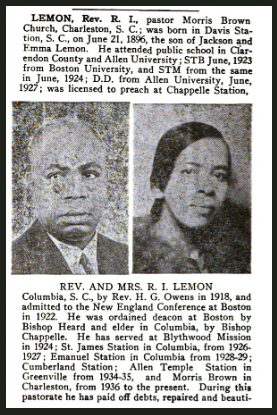
Her maternal grandparents, R. I. Lemon and Virginia Lemon, were born in rural South Carolina near the turn of the twentieth century. They came of age as the political freedoms won by their parents’ generation were dismantled and Jim Crow took hold. Both attended Allen University in Columbia, where R. I. later became a professor before earning his theology degree from Boston University in 1923 and serving as an AME minister. Virginia was an accomplished musician and assistant organist. Together, they raised eight children and became highly respected members of their community. R. I.’s commitment to racial equality extended beyond the pulpit into the broader struggle for civil rights, including his work with the NAACP. As Dr. Murray-García recalls from her mother’s stories, there was “always a chance he would be lynched” because he was “very clear about what he was trying to accomplish, not just as a pastor, but as an American.”
Murray-Garcia’s paternal grandparents were sharecroppers, and didn’t read or write, but believed strongly in the power of education. As a young teenager, Murray-Garcia’s father left the family farm to live with an uncle in a larger town so he could attend high school. Her father later earned a full scholarship to Allen University, where he met his future wife, Dr. Murray-Garcia’s mother, Laura.
A Legacy of Education and Possibility
During the Second Great Migration, as African Americans continued to leave the segregated South in search of greater opportunity, Dr. Murray-Garcia’s parents relocated to Tulare, California, where both became teachers and rooted themselves in the community. Her father rose to become a principal, and her mother was named Teacher of the Year - they had done what America promised was possible.
But in a year marked by the assassination of Medgar Evers, the passage of California’s Rumford Fair Housing Act, and James Baldwin’s exploration of racial injustice in the Bay Area, the young couple, now with two young children and Dr. Murray-García a newborn baby, encountered a stark reality: despite their financial means and professional achievements, they were denied the opportunity to purchase a home in Tulare’s newer section. The experience prompted the family to leave Tulare for the Bay Area, first Cupertino and later Mountain View. They carried the experience without bitterness but were clear-eyed about its reality: “They didn't sugarcoat what was going on for us.” Her parents named racial inequality for what it was—not an abstraction, but a lived reality.
In 1972, her father’s Rockefeller Foundation Fellowship for School Superintendents took the family from Rochester, NY to Oakland, CA and eventually to Baltimore, MD where they remained for four years, giving Murray-García a broader understanding of race and community through her experiences with multigenerational African American communities. When the family returned to California, she attended high school in East San Jose, where the diversity of her classmates, her love of sports and science, and her growing compassion for others helped shape the sense of purpose that would lead her toward medicine.
Her mother, a brilliant teacher, nurtured her daughter’s love of learning through regular trips to the library, a beloved typewriter, and competitive math contests. She also taught Murray-García how to navigate an academic world that did not always acknowledge white privilege or the biases embedded in measures of achievement. “For so many people, standardized testing is a reflection of their value, of their identity, of their life chances,” Murray-García recalls, but her mother “created a scenario where it doesn’t mean anything about me. They are going to try to trick you. Learn to game these exams and move forward, it seemed, she implicitly taught me.”
These early lessons taught Murray-García to question the measures by which she, and countless others, are judged, recognize the limitations of those measures, value the experiences of others, and move confidently toward what mattered to her.
Finding Her Voice at Stanford
Those lessons followed Murray-García to Stanford University, where new experiences of race, privilege, and academic achievement sharpened the critical lens that would eventually shape her work in medicine.
Majoring in Human Biology gave Murray-García the opportunity to apply her newly developing critical lens to science and, eventually, medicine, where she encountered professors and classmates who were often unaware of the implicit biases and structural inequalities shaping their thinking and research. As she began to recognize how deeply those assumptions could influence what questions were asked, whose experiences were considered, and what was accepted as truth, she became increasingly compelled to confront them - a “watershed moment” that would ultimately become her “life’s work.”
It was also at Stanford that Murray-García encountered a demanding and formative figure who would open the door to rigorous academic medicine and research; she recounts, “I had the great privilege of working with a developmental biology bench researcher, Merton Bernfield. As an aside to his lab science, he was interested in why African American infants die at twice the rate of white infants.”
When Bernfield offered the research opportunity to trainees, residents, and students, Murray-García was the only one who expressed interest. Immersing herself in rigorous academic research on racial disparities in birth outcomes, she developed the work into her senior honors thesis, which ultimately led to a publication with Bernfield in the New England Journal of Medicine, “The Differential Effect of Prenatal Care on the Incidence of Low Birth Weight among Blacks and Whites in a Prepaid Health Care Plan.” The experience showed her the importance of including those “who can speak to a whole different lived experience” and bringing those perspectives into scientific inquiry.
Continuing to UCSF Medical School, Murray-García completed her residency at Oakland Children’s Hospital, where she met her mentor and friend, Dr. Melanie Tervalon. Dr. Tervalon, a daughter of the Civil Rights Revolution, had been organizing movements to change Oakland and the U.S., by then, for two decades. Then, in the spring of 1992, against the backdrop of the Rodney King verdict, these institutional confrontations at Children’s Hospital became a seed for a broader reckoning. Dr. Tervalon, Dr. Murray-García, hospital staff, and the surrounding community began exposing and addressing the realities of injustice and oppression within the organization, and their consequences for profound inequities in health care.
From Knowing to Understanding
From this work in Oakland, Dr. Murray-García and Dr. Tervalon began to dialogue about the limits of the language medicine used to address inequity. At the time, Cultural Competence was the prevailing framework, but they came to see its limitations: “Medicine and medical education absorbed cultural competence through its own lens of professional competence. Which, in the language of the medical profession is, ‘how much do you know? How much can you manipulate?’” As time progressed, they recognized that the attempt to “mechanize hundreds of years of racial inequality” could obscure a deeper danger: “Patients are in grave danger, not always because of what [the provider doesn't] know, but because of [the provider’s] underdeveloped racial identity and potentially dysfunctional response around not knowing.” For Murray-García, cultural competence rested on a premise that could never fully account for the lived realities of patients or the limits of what a provider could know.
As she and Tervalon continued the work, “The training outcome started to sound more like humility, to us, than competence. The idea of looking to a patient for real-life contextualization of what's going on for them in this disease - that requires, not competence, but humility. We need [providers] to step back and honor the expertise that's in the community. We need [providers] to really understand the power they have to shut people down.”
Dr. Murray-Garcia continues, “I'm still talking about Cultural Humility when I'm talking about structural change - from the history of our program, it was always about social change, as well as down to self, to the interpersonal. We're talking about a relentless, lifelong commitment to self-awareness.”
A Community, A Voice, A Movement
Dr. Murray-García’s influence has extended well beyond medicine into the Davis, CA community, where for more than a decade she worked with young people, educators, and community members to confront racism, educational inequity, hate incidents, and disparities in the city’s schools. Her work with Davis youth led to the award-winning documentary From the Community to the Classroom, while her 15 years as a columnist for The Davis Enterprise gave her another platform to challenge complacency and encourage difficult conversations about race, parenting, education, equity, and justice. Her contributions to educational equity and police-community relations have earned the UC Davis Chancellor’s Achievement Award for Diversity and Community and the City of Davis Covell Citizen of the Year Award for Lifetime Achievement in Volunteering, but perhaps the deepest measure of her work lies in the students she has taught, the communities she has brought into the conversation, and the generations of health professionals she has challenged to see medicine - and their own responsibility within it - differently.
Dr. Murray-García received her BA in Human Biology with Honors and with Distinction from Stanford University, her MD from UC San Francisco, and completed pediatric residency training at Oakland Children’s Hospital, followed by an MPH from UC Berkeley. She is now a pediatrician and a Health Sciences Clinical Professor Emerita at the UC Davis Betty Irene Moore School of Nursing. Her scholarship has appeared in The New England Journal of Medicine, Pediatrics, Medical Care, Academic Medicine, and the Journal of Health Care for the Poor and Underserved. Her work has also taken shape in programs that bring learning beyond the classroom, including the Interprofessional Central Valley Road Trip, which brings students, faculty, staff, and community members together to explore health disparities, social determinants of health, and the region’s history. She created the Interprofessional Book Club and developed the Anti-Racism and Cultural Humility Training Program, the latter a 3-day intensive for clinical leaders, administrators, and faculty at UC Davis Health. both created spaces where health professionals could listen, learn, and confront the realities of inequity.
For Dr. Murray-García, legacy is not simply what we leave behind, but also what we inherit: the courage of those who came before us, the lessons born from their struggles, and the responsibility to carry something forward. In her life, the past is not distant; it lives in the stories she tells, the people she remembers, the faces of young people just wanting a fair shot at fully developing their potential, and the work she has devoted her life to doing. Those who came before her remain present in the path she has chosen.
Living a life of purpose and working tirelessly to confront inequality and injustice, Dr. Murray-García echoes the sentiment at the heart of her grandfather’s legacy - “I’m not working for myself,” he’d say. “I’ll never see these changes. I’m working for my children and my grandchildren.”
This fall, the Foundation will present the Alma Dea Morani, MD Renaissance Woman Award to Dr. Murray-García at a free virtual event hosted in partnership with the New York Academy of Medicine on November 5th, 2026, at 4:00 pm ET, where she will deliver a talk entitled “Cultural Humility: Interrupting Scripts of Inequality.”
References and for Further Reading:
Tervalon, M., & Murray-García, J. (1998). Cultural humility versus cultural competence: A critical distinction in defining physician training outcomes in multicultural education. Journal of Health Care for the Poor and Underserved, 9(2), 117–125. https://doi.org/10.1353/hpu.2010.0233.
Allen University. (n.d.). Allen University. https://allenuniversity.edu/
Medgar Evers. (n.d.). In Wikipedia. Retrieved September 17, 2026, from https://en.wikipedia.org/wiki/Medgar_Evers
California State University, Bakersfield. (n.d.). Rumford Fair Housing Act. https://hrc.csub.edu/housing-history/rumford-fair-housing-act/
Take This Hammer (film). (2026, August 13). In Wikipedia. https://en.wikipedia.org/wiki/Take_This_Hammer_(film)
Stanford University. (n.d.). Stanford University. https://www.stanford.edu/
Merton Bernfield. (2026, August 29). In Wikipedia. https://en.wikipedia.org/wiki/Merton_Bernfield
Murray, J. L., & Bernfield, M. (1988). The differential effect of prenatal care on the incidence of low birth weight among blacks and whites in a prepaid health care plan. The New England Journal of Medicine, 319(21), 1385–1391. https://doi.org/10.1056/NEJM198811243192105
Tervalon, M. (n.d.). About Melanie. Melanie Tervalon Consulting. https://melanietervalon.com/about/
Rodney King. (2026). In Wikipedia. https://en.wikipedia.org/wiki/Rodney_King
Chavez, V. (2012, August 2). Cultural humility: People, principles and practices [Video]. YouTube. https://www.youtube.com/watch?v=SaSHLbS1V4w
Garibay, C., & Gonzales, R. (Directors). (2011). From the community to the classroom [Film]. CreateSpace
Murray-García, J., Ngo, V., Yonn-Brown, T. A., Hosley, D. H., & Ton, H. (2022). California's Central Valley: Teaching social determinants of health and cultural humility through an interprofessional, overnight road trip. Journal of Health Care for the Poor and Underserved, 33(2), 819–841. https://doi.org/10.1353/hpu.2022.0066