
The Voice for Women in Cardiovascular Medicine Oral History: Nanette K. Wenger, MD, MACC, MACP, FAHA
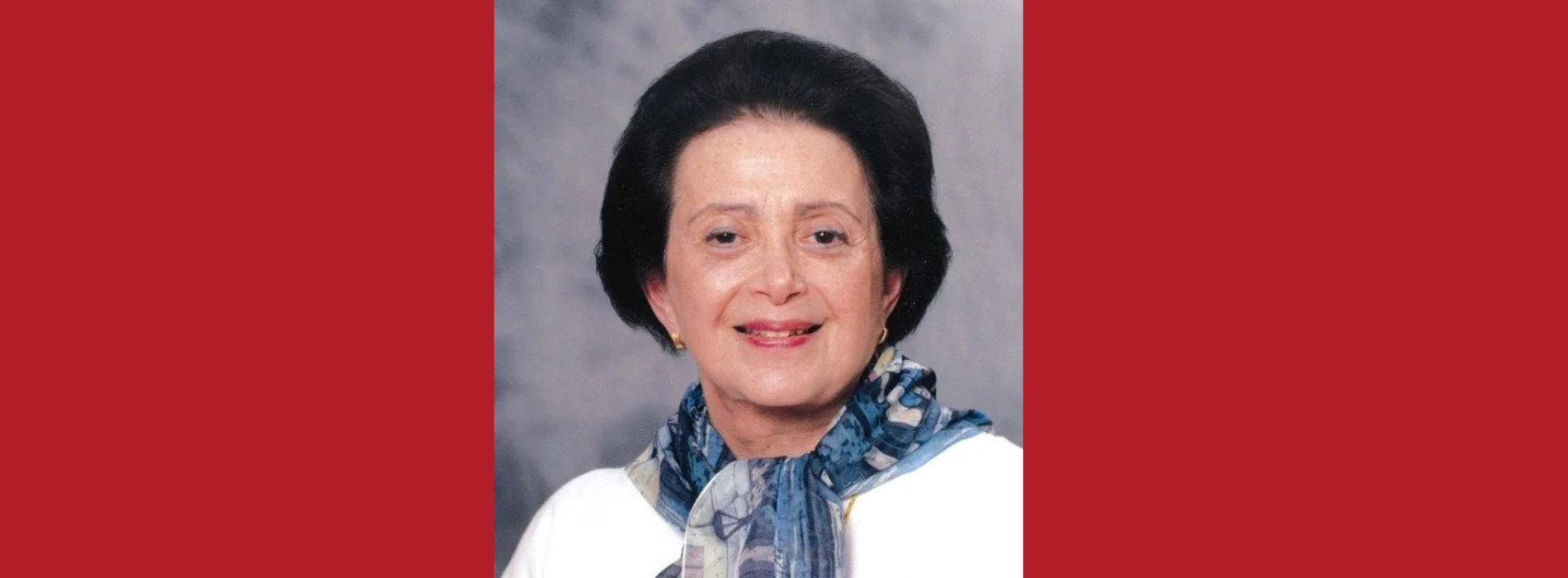
As part of its mission to preserve and promote the legacy of exemplary women in medicine, the Women in Medicine Legacy Foundation created the Alma Dea Morani Renaissance Women in Medicine Oral History Project — an accessible collection of recorded and transcribed interviews with past Alma Dea Morani Award winners.
The Foundation is pleased to announce the expansion of our collection with the addition of 2023 ADM Award winner, Nanette Wenger, MD, MACC, MACP, FAHA.
In a four-hour oral history interview conducted in two virtual sessions in December 2025, Dr. Wenger reflected on a career shaped by curiosity, persistence, and a commitment to patients and populations often left at the margins of care.
Dr. Wenger's story begins with her parents, who had each immigrated to the United States before they met. Growing up in a household that celebrated diverse languages and cultures, she learned from an early age to appreciate the richness of different perspectives and traditions.
From her educational beginnings at Hunter College in New York City, to her medical education at Harvard, and subsequent fellowship at Mount Sinai, Dr. Wenger worked at the frontiers of cardiology and studied under preeminent physicians and researchers at that time.
In 1958, after marrying gastroenterologist Dr. Julius Wenger, Dr. Nanette Wenger moved to Atlanta when he joined Emory University. Following additional training at Emory University School of Medicine and Grady Memorial Hospital, she joined the Emory faculty and became Chief of the Cardiac Clinics at Grady. While raising three daughters alongside her husband and coordinating their clinical schedules so they were never on call simultaneously, she described this period as one of extraordinary energy and optimism among young physicians who believed they could transform medicine. Living and working in Atlanta also heightened her awareness of inequities in medicine and society. At Grady, she challenged segregated practices in patient care, and encounters with Martin Luther King Jr., Coretta Scott King, and Congressman John Lewis reinforced her conviction that entrenched systems should be questioned.
Over a career that produced more than 1,700 scientific articles, reviews, and book chapters, Dr. Wenger repeatedly focused on areas of medicine that had been overlooked. Among the most significant was women's cardiovascular health, where she challenged the long-held belief that heart disease was primarily a male condition and advocated for the inclusion of women in research and greater recognition of sex differences in cardiovascular disease. Describing her persistence as a "bulldog mentality," she continued pressing for change despite institutional resistance and identified her first-authored 1993 New England Journal of Medicine article on cardiovascular disease in women as an important milestone in the field.
Dr. Wenger brought the same commitment to geriatric cardiology, recognizing that older adults were frequently excluded from research studies and clinical guidelines. As president of the Society of Geriatric Cardiology and editor-in-chief of the American Journal of Geriatric Cardiology for more than fifteen years, she championed the inclusion of older adults in both research and practice. She also helped advance cardiac rehabilitation and prevention, contributing to evidence supporting early ambulation after heart attacks and helping establish one of the earliest cardiac rehabilitation programs in the United States at Grady. Across these efforts, she embraced a "bottom-up" approach to leadership, emphasizing shared vision, collaboration, and mentorship of future leaders in cardiovascular medicine.
Now in her mid-90s, Dr. Wenger continues to see patients, write, serve on committees, and mentor younger physicians, and has long been actively engaged in Atlanta-area organizations, roles she has maintained for nearly seven decades.
This oral history project highlights the recipients of the Foundation’s Alma Dea Morani, MD Renaissance Woman Award. This is a unique opportunity for these medical pioneers to share their story in their own words, and for future generations to listen to them tell it.
The Countway Library of Medicine has partnered with us on this project. They have created an online exhibit of each of the oral histories that the Foundation has collected to date. This exhibit gives researchers, educators, and the public the ability to access this content. Dr. Wenger's full oral history will be added to this exhibit in 2026. A preview of this oral history is available on the WIMLF website: www.wimlf.org/oral-histories. and on the WIMLF YouTube channel: WIMLF.